Tuesday, October 17, 2017

Do We Have It "Right"?

As I mentioned the other day, the idea of covering a myriad of topics that fall under the category of “Human Rights” in one post is absurd. Even with my only covering translated picture books - still daunting beyond imagination. Additionally, I think that within the last few years we have been seeing an increased awareness and even publication of books that address these topics in the United States as well. I point this out because the most recent of the books that I’m including in this post was originally published in its source language in 2011 and the oldest in 2000. So while the world may be one step ahead of their decision to share with children books on xenophobia, the rights of children and LBGTQ+ themes based on those publication dates, I think the number of US titles that take on these topics, controversial or not, will continue to increase. (At least I hope it will!)

All that in mind, my offerings for today’s post are really some of my favorites or the ones that I felt were noteworthy for a particular reason. While I wish I could include so many of the other books I found, I keep reminding myself that the purpose of a blog is just to present some of the titles out there in hopes of increasing awareness of the benefits of reading the world. I’ve mentioned it before, but if you’re interested in other titles, leave me a comment or contact me via email. As an extra bonus, I’ll suggest two Australian titles which I know aren’t “technically” translated that feature characters that are refugees at the end of this post. But before that, let’s take a closer look at some books that really stood out to me for their unique approaches.
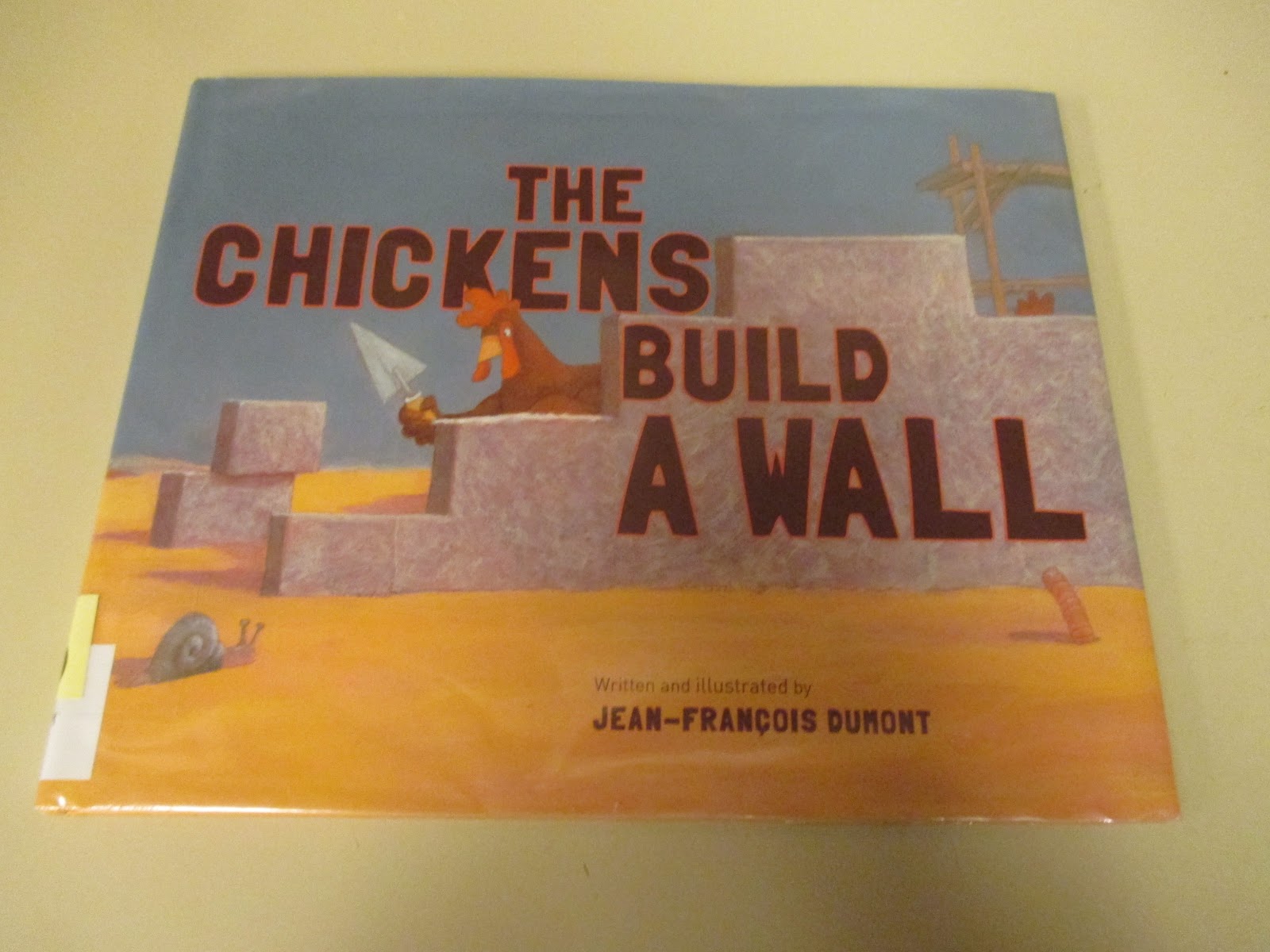


Translated by: © Eerdmans Books for Young Readers

I first read The Chickens Build A Wall by French author Jean-Francois Dumont shortly after last year’s Presidential election. Remember how a few paragraphs ago I said that perhaps the world was one step ahead of us? This book, originally published in France in 2011, in my hands right then seemed like solid proof. The chickens in Dumont’s work, under the urgings of the rooster who ‘decided that this was the perfect occasion to take control of a barnyard full of hens’ determine the only way to protect themselves from a mysterious visitor (a hedgehog) that shows up one day, is to build a wall around the henhouse. Hmmm, sounds strangely familiar, right?
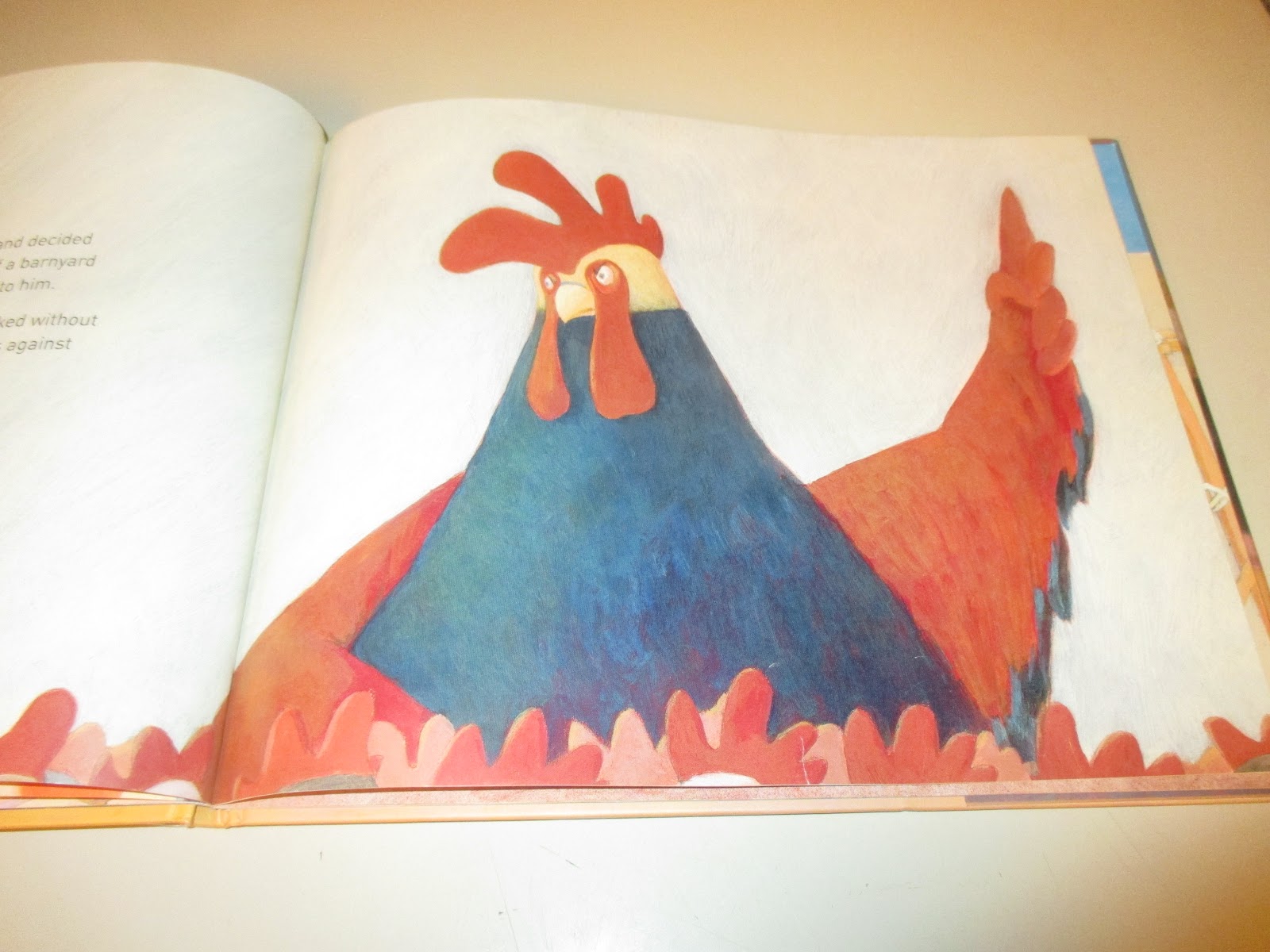


Dumont’s choice to personify animals who make decisions on how to treat each other based on ignorance and fear is a means of discussing xenophobia with young readers. While none of the barnyard animals know exactly what a hedgehog is, only the chickens react so extremely, turning to gossip, suspicions and outright accusations (which are proven false) to justify their reaction. The irony then becomes once the wall is built, with all the chickens safely inside, they learn that the hedgehog had been wintering in a pile of hay within the wall with them all along.

As with all the books in this category, the one thing I find it necessary to keep coming back to is the potential for them to be conversation starters. The fact that the political connotation or the term xenophobia may be beyond the age range the book is geared at doesn’t really matter. Even young readers are going to recognize that the chickens excluded the hedgehog because he was different than them. There’s obviously more to it than that, but it’s a start! It’s also very engaging, using humor and illustration to balance a complex topic.


Dumont’s other titles are similarly allegorical in nature. The chickens and other barnyard animals take center stage in two more social justice based books by Dumont, The Sheep Go On Strike and The Geese March In Step. Personally, I thought the text in Sheep was a little more advanced and the message a bit more didactic (the sheep strike due to unfair working conditions!), potentially failing to engage younger readers on the same level as Chickens, but I enjoyed the two-page spread illustrations more. I haven’t had a chance to read Geese, but the “be yourself no matter what” message at the heart of the story seems to match with the underlying theme of “treat others how you would want to be treated” that underlies Dumont’s work. The rat from the barnyard, Edgar also has his own story which I haven’t had the chance to read. I’m also anxious to eventually get my hands on Dumont’s most recent translated title, I Am A Bear, which tells the story from the point of view of a homeless teddy bear who lives on the street and shows how people react to him. If you want to know more about any of Dumont’s stories, I found this really great podcast from the publisher of most of his translated titles, Eerdman’s Books. Since how we treat people is really at the heart of human rights (duh!) I wanted to spotlight Dumont’s work because I think he tackles it at a child’s level with the use of animals and humor, but at the same time with a nod to the more perceptive reader who understands the underlying satire and irony.


Translated by: Unknown (The book does not give any indication as to the translator and the original US publisher, Tricycle Press, ceased publishing in 2011)

A full five years before the American picture book And Tango Makes Three by Peter Parnell and Justin Richardson found itself at the center of censorship debates on same-sex marriage, adoption and homosexuality in animals, King & King by Linda de Haan and Stern Nijland was published in The Netherlands. The book, tells the story of Prince Bertie, who must find a princess to marry, according to his mother the Queen who is ready to hand over the realm. Though he’s “never cared much for princess” 
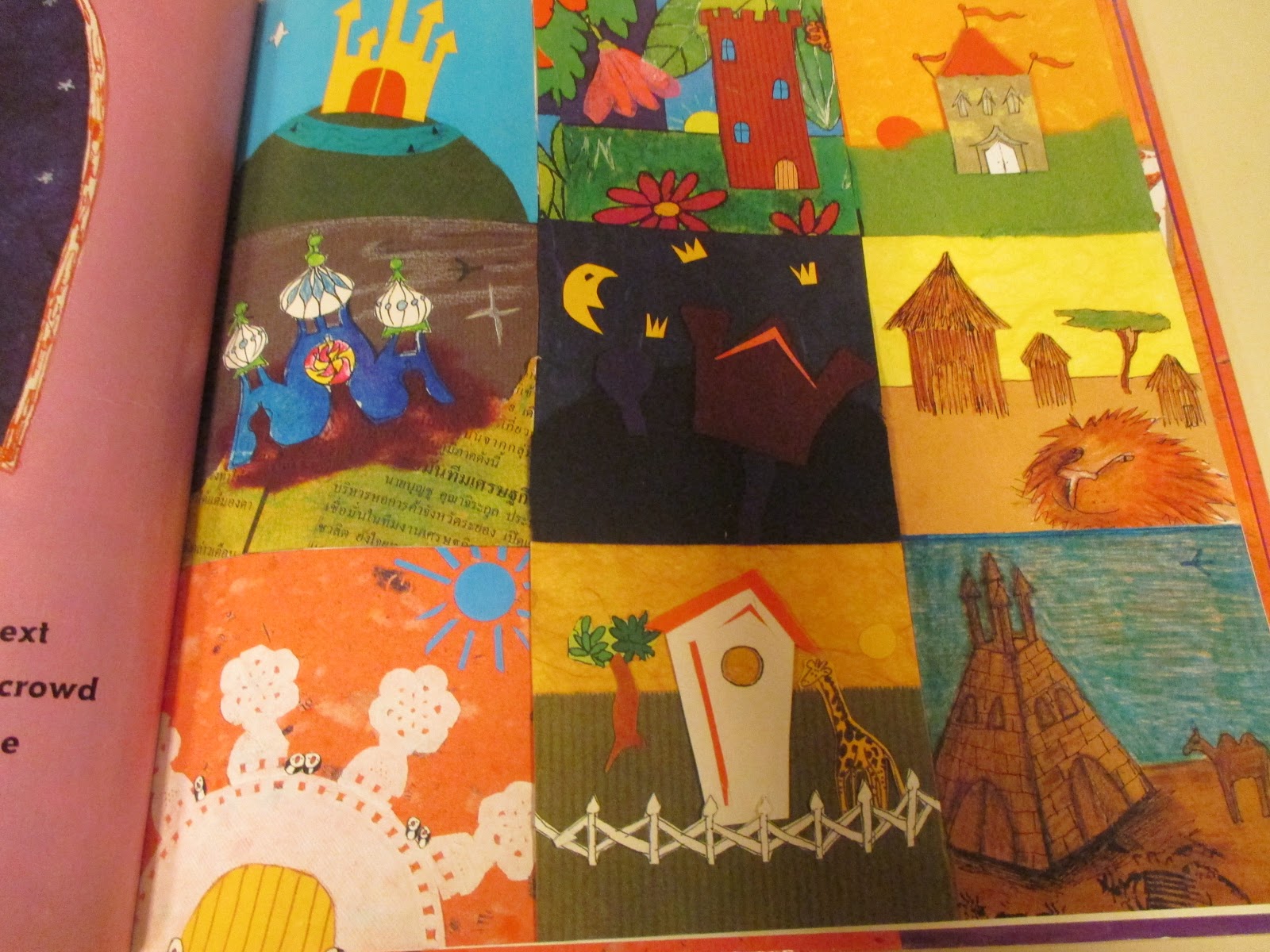


Prince Bertie agrees and a peck of potential princesses are paraded past the pondering prince (It’s a fairy tale, forgive my whimsy). With the arrival of Princess Madeline, Bertie realizes he has found “the one” – Madeline’s escort and brother, Prince Lee, as they both instantly fall in love with the exclamation “What a wonderful prince!” The two marry, becoming King & King, allowing the Queen to retire. Their happily ever after ends in a kiss, the first ever illustration of a gay kiss in a children’s picture book.


It’s not surprising that the book came from The Netherlands, as it is considered one of the most progressive nations in the world regarding LBGTQ+ rights. It became the first country to legalize same-sex marriage in 2001 and a 2015 European Union member poll found that 91% of residents of The Netherlands supported same-sex marriage. Not so in the US when it was first published here in 2003. The book soon found itself on many challenged and banned lists. It was the catalyst behind the Parental Empowerment Act which called for national boards composed of parents to review books purchased by elementary schools and would have prohibited states that did not do so from receiving federal education funding (it thankfully died in committee). It was also the book that led to the creation of an anti-gay lit resolution in Oklahoma and was the source of a number of major federal lawsuits. As recently as 2015, a teacher in North Carolina resigned over the backlash that ensued over his choice to read the story to his class of third graders after he perceived negative gay stereotyping among his students.

The amount of controversy surrounding the book is not why I chose to share it, though. I mean, this is the controversy category, a lot of the books in this category make at least some people uncomfortable about sharing them with children. And maybe not even because they don’t agree with what it is about, but perhaps because they’re not ready to answer questions they might spark in young readers. No, I chose it because of the medium it chose to tell the story.

If you think back a couple weeks, my first category was full of fairy tales, folklore and mythology and I repeatedly mentioned that it seemed like the logical place to start because of how universal such stories are. Variations of a singular tale that share similar motifs exist across the world. I noted that this was a way for a reader to connect what they already knew as familiar. That is part of what makes King & King unique, by drawing upon classic elements familiar in the canon of children’s literature, it celebrates and identifies with a marginalized culture. This idea was further explored by Amy T.Y. Lai in her 2010 essay “Waiving the Magic Wand: Forging greater open-mindedness by subverting the conventions of fairy tales” in which she notes King & King “subvert the conventional fairy tale by including many unconventional elements” and works to “ try to influence their readers and help bring about changes in existing laws that oppress gay people.”

So my purpose behind sharing this title is because I think that King & King is a pioneer. It certainly is no longer the only (or even the best) choice out there to represent the need to give each individual respect and equal treatment, regardless of their sexual orientation. Also, as a slight rabbit hole, it is also worth noting that there was a follow-up title, King & King & Family. 


What I found incredibly interesting is that the book was written at the request of the American publisher, Tricycle Press, and was first published in the United States. There are many positives to the story; King & King adopt a little girl, the family is multi-racial, the illustrations are even more colorful than the first book. But for me personally, it felt more forced than the first book, as if it had an agenda. After I learned about why it was written, I wonder if that may have something to do with it. Just a thought, and again, just my personal opinion. The second book too could be considered a pioneer, I’m just not sure if it is as impactful as King & King.


Illustrated by: Aurelia Fronty

Translated By: Helen Mixter

As with the previous two books, my third selection looks at a topic where it seems the US is behind the rest of the world in their stance on a certain area of human rights. French author Alain Serres, who is known for books dealing with human rights, especially those of the child, pairs with illustrator Aurelia Fronty, to present the concept of human rights (specifically those of children) as set forth in the United Nations Convention on the Rights of the Child. The vibrant illustrations accompany a text told from the point of view of a child describing what it means to have rights that range from the right to have food, water and shelter, to the right to be free from violence. 


The children in the illustrations are each unique, different skin tones, sizes, styles of dress – it is truly a global image of childhood and that the rights described are for each of those children no matter where they come from.


The book, as noted, is based on the 54 articles that the Convention laid out, which are based on “non-discrimination (the rights apply to all children), what is best for the child, the right to live and grown in good health, and the right for children to express their opinions in matters that concern them” (afterward of text). In the afterward that follows, it is noted that 193 states are party to the Convention, having agreed to make changes or new laws that will support it. This does not include the United States who signed to show their support but has not ratified it.  If I were to hazard a guess, it is probably not the content of the articles that is the source of the disagreement but rather the monitoring and compliance that is the reason it has yet to be ratified.  But all of that is definitely another blog for another day.  Whatever the case may be, it makes me sad to admit that before I came across this book I was unaware of that we as a nation had not joined with the rest of the world to fight for such an important cause, thus why I thought it was an important one to include in this post.

(Kristi’s extra thought: Though not translated, We Are All Born Free and Dreams of Freedom are two other phenomenal choices that look at human rights and feature the works of international artists and illustrators. Both are based on the 30 rights set down in 1948 by the United Nations.)

Like I said from the outset – this is a huge topic to cover. What I found most important to highlight where some of the areas that I think the US is still behind the rest of the world and offer up some worldly titles that we can then use to fill those gaps. I did promise two more bonus titles. Both are from Australia and are stories of children that are refugees. If this is a topic that is of interest, I highly suggest checking out My Two Blankets (and pay close attention to the use of color!) and Ziba Came On A Boat. I can vouch for the fact that there are even more recent US titles on this topic as I’ve been collecting them for my amazing group that I am so proud to be a part of, Literary Activists @ EMU.  (You can find us on Facebook and Instagram!)  We are going to be doing helping at an event hosted by the Ypsilanti library on November 4th featuring some of these stories as well as a reading of Lost and Found Cat by author Amy Shrodes.  If you're in the area and interested in attending, check out the information here. 

In the meantime, we’re almost finished dealing with controversy! I’ll be back on Friday with one more post looking at some books that deal with emotions. Then next Tuesday we’ll be going “outside the box” with some dual language books.

Friday, October 13, 2017

War, What Is It Good For?

Faithful Elephants
By: Yukio Tsuchiya
Illustrated By: Ted Lewin
Translated By: Tomoko Tsuchiya Dykes

“This one’s just sad.”  I turned around to find my nine-year-old son, clutching a copy of Faithful Elephants by Japanese author Yukio Tsuchiya in his hands, tears visible in his eyes.  After a conversation earlier in the day with my advisor about how the books in my war post elicited emotion, she suggested I take a closer look at the title.  I had stopped by the library and left it sitting on my desk with my other chosen books for the category to get back to later when Noah came across it.

The two kiddos in my house I refer to as “The Dynamic Duo” have earned their fair share of credit when it comes to this project of mine.  They have read (multiple times) all the books I have tracked down, often giving me their thoughts and opinions.  Practicing what I preach there are no off-limit books in my house and I wasn’t surprised he had picked it up.  The library is my second home and my office is always covered with new books for all of us.  (There’s already a heated debate about some of the Caldecott front-runners around here.  If you love picture books I suggest keeping an eye on the Calling Caldecott blog!) And I wasn’t surprised my sensitive animal lover was in tears because I had been myself after reading it a few hours before.

There is no doubt the book, which recounts the story of the decision to kill the animals at the Ueno Zoo in Tokyo, Japan during World War II, is heart-wrenching.  The army, fearing that dangerous animals would run wild through the city if cages were destroyed during bombings order the killing of all the zoo’s animals.  The story focuses on the three elephants, John, Tonky and Wanly and the horrors of their deaths by starvation.  The story alone is enough, but it’s the illustrations, such as one of the dead elephant’s trunks hanging through the bars, that really ripped my heart out.  As Noah had so succinctly pointed out it was “just sad.”


(Kristi’s Note:  There has been questions raised over the validity of this book being called a true story.  If you’re interested, you can read one historian’s rebuttal here.  I’m going to stick with my “another blog, another day” mantra and side step this rabbit hole.  Whether it’s 100% historically accurate or not does not, in my opinion, change the emotional reaction to the injustice that is portrayed.)

I think sadness is a natural reaction to many books on war, we feel powerless because most are based, at least in part, on a war that has already occurred.  There’s nothing we can do to change what already happened and it can be difficult to get stuck in that powerful grip of grief, especially for a young reader.

So as much as my parental heart was breaking for the sadness Noah was feeling, I was encouraged by the fact that he had come to me.  Perhaps looking at first for just the open arms I automatically offered, but knowing that I was there to talk about it if he wanted to explore that feeling on a deeper level.  That conversation, that is where the power of these types of stories lie; they help the reader look beyond the sad to ask questions and try to understand; to empathize.

That moment in the kitchen, while it was still so raw he wasn’t quite ready to talk yet and I let him be.  I found him a little while later with the rest of the books I had set aside for this post, The Cherry Tree, Hiroshima No Pika, The Red Piano and Otto: The Autobiography of a Teddy Bear, curled up on the papasan in my office.  If I haven’t said it lately; kids are amazing.  He’d already read those titles before but I think he was, like I had been doing earlier, trying to draw connections to sort through his feelings.  I knew he’d find me when he was ready.

A few hours later, on a long walk on a gorgeous fall evening, he suddenly started with “That book about the elephants, Mom, it was really sad.”  The door opened and we began a long discussion on what made him sad and what he could do about that feeling.  He snuck in another little nugget that helped me put what I wanted to do with this post into perspective when he said; “I don’t really know that this made me sad about war though, it really just made me sad about how badly they treated the animals.” 


He had a point, and I think that many readers may have a similar reaction to the book.  When I pointed out that what happened to the animals was because of the war, he agreed but said he wasn’t sure if it really fit in with the rest of the books I had chosen for my war post.

This is where I stopped and did a little happy dance in my head.  While I can’t argue with him that Faithful Elephants may not be the best book to pick if you strictly want to stick to the subject of war, but it had struck a nerve with him that it was connected and he wanted to keep talking.  Without any prompting on my part he had pointed out what I found most important about all the books in the controversy category; they invite conversations. 

And so we had a conversation.  And instead of my ramblings about the other books in the category I thought I might offer up some of the wisdom (from both this Mom and her amazing nine-year-old) about what we discovered about each of them.


The Cherry Tree
By: Daisaku Ikeda
Illustrated by: Brian Wildsmith
Translated by: Geraldine McCaughrean
I wasn’t surprised when I asked him which one was his favorite that Noah responded with The Cherry Tree by Daisaku Ikeda or that his reason why was “because it ended really happy.”  The story is of two Japanese children whose father died when their village was destroyed by bombs, leaving them and their mother devastated.


When the two find an old man protecting a dying cherry tree before winter comes, they are determined to see the tree bloom again.  Their mother encourages them to hope, a theme that runs through the tale and is rewarded with a beautifully blooming tree admired by all.  To me, this is a book that is more about the important of perseverance and hope than it is on war, which is why I had picked it for this category.  This may be a good option to broach the topic with young readers that aren’t quite ready for some of these other titles.


Hiroshima No Pika
By: Toshi Maruki

Translated By: Kurita-Bando Literary Agency (Kristi’s Note, there is not a single translator given credit for the title, and this is the way the Batchelder Award was given in 1983.)

I asked him to imagine that one day in the future he was an advisor to the President and it was his job to convince the President not to go to war by giving him one of these books.  After I reassured him that no it would definitely not be our current President he picked Hiroshima No Pika by Toshi Maruki because it showed how bad war can be for humans.  The books has been the recipient of numerous awards including the Batchelder Award and the Ehon Nippon Prize, given for the most excellent picture book from Japan, though it hasn’t been without its fair share of controversy, often ending up on banned and challenged lists.  


As Noah pointed out, the book doesn’t shy away from an accurate depiction of the horrors of war.  It is a story of “The Flash” caused by an atomic bomb being dropped on the Japanese city of Hiroshima and the after effects as told by seven-year-old Mii.  Like Faithful Elephants this book is a heartbreaking, for me even more so as it was based on an actual historical event that caused an unimaginable amount of human suffering and devastation.  The images of chaos, destruction and death aren’t ones the reader is likely to forget.  


Maruki acknowledges in her endnote that though she wanted to write the book it took her a long time to complete as “it is very difficult to tell young people about something very bad that happened, in the hope that their knowing will help keep it from happening again.”  I think Noah recognized that in selecting this as the book to put into the hands of someone who could have an impact on that.


The Red Piano
By: Andre LeBlanc
Illustrated By: Barroux
Translated by: Justine Werner

The Red Piano by Canadian author Andre LeBlanc was his least favorite because he really didn’t understand why the girl was in the camp in the first place.  I agree that without the historical context this one may not evoke the same response as some of the others.  Additionally, I struggled with putting this book, set during China’s Cultural Revolution in this category or my next post on human rights.  The books was produced by Amnesty International and tells the story of a young girl being “re-educated” to the Communist way of life.  At a camp separate from her family, she labors by day and sneaks out at night to practice a piano in the nearby village.  

I won’t give away the whole story which is beautifully illustrated by Barroux, but I will point out that I feel that the fact that the Cultural Revolution is considered one of the bloodiest eras in China’s history justified my choice to categorize it as “war,” the real reason was because of the human connection.  Though not a biography, the story is based loosely on the life of concert pianist Zhu Xiao-Mei.  As I’ve noted, different elements touch us all in different ways and for some, it may be the ability to connect to an actual person who lived through such a tumultuous experience.


Otto: The Autobiography of a Teddy Bear
By: Tomi Ungerer
Translated by: None Noted, the book was published by Phaidon Press in 2010, so it may have been done “in house”  It was translated from German.

Tomi Ungerer’s Otto: The Autobiography of a Teddy Bear is the one that Noah said he would give to his sister or friends to explain why there shouldn’t be wars.  Similar to Hiroshima No Pika in some of the raw depictions of battles on the streets of Germany during WWII, I think Noah’s right that this one may be a good balance between soft (it’s told through the eyes of teddy bear and it has a positive ending) and realistic.  Ungerer doesn’t hold back on his images, but by personifying a child’s toy and channeling complicated emotions through what is normally viewed as an object of comfort makes is more approachable for a young reader.  Make no mistake, bad things happen to Otto (he’s shot, he ends up in the garbage with his stuffing ripped out and is abandoned in a pawn shop for years) but he eventually ends up back in the arms of the one who first loved him.

What began to become clear during out conversation that all these books are all necessary because they each have the ability to connect to a reader in a different away.  Each reader responds and reacts differently to the words and images on the paper, they each have different needs in that moment.  It’s interesting to consider that some of these titles in their source language may be directed toward a much different age reader than what we may see in their translated form because of what and how different information is shared with children in other cultures.

My conversation with Noah didn’t end with the books he had read, but continued on to link some of the feelings the books brought up to more current events.  It always irks me when someone refers to a book as “just a kid’s book,” and it’s conversations like these that were inspired by that “kid book” that I hold up as an answer to that.  There is nothing “just” about books that tackle events and problems that adults can’t even wrap their brains around.  I’m glad that all the books in this category exist to try to help all of us, not just kids, learn, understand and empathize.

Well, death and war – are you all still with me?  Yes, this is a children’s literature blog, I assure you.  And we will get back to some much lighter themes, (Noah asked me to mention that he can’t wait to share his thoughts on poop!) but I’ll be back on Tuesday to look at a few books dealing with human rights.  I realize that is a VERY broad topic and I’m going to be covering a wide range of issues, but I’m trying my best to highlight the fact that if you need them, there are books out there dealing with a wide range of tough topics to tackle.  See you Tuesday!


(Kristi’s additional interesting rabbit hole on the topic of war…  If you have some time, peruse the list of Batchelder award winners.  Many of them have to do with war.  In fact, there are quite a few picture books on there that I could have used for this post.  I personally find that a little worrisome because based on what I now know, I don’t think it’s a very accurate depiction of the titles that would be eligible for the award.  If that is what readers are using as their “go to” source to find translated books, it’s a little skewed.  But, another blog for another day!)

Tuesday, October 10, 2017

The Opacity of Death

I’ve noticed that many of the translated books I’ve come across have this feeling about them.  I’ve struggled to put it into words, but Dutch children’s author Isabel Hoving came to my rescue.  She describes reading translated literature as a child as “the curious rubbing against each of language” and compares it to having double vision.  As an adult she recognizes this as style which she calls “the untranslatability, the opacity of other cultures.”

(Don’t worry, I had to look up opacity for clarification, too.  I’ll give you a minute.)

In all my categories, Controversy is the one where this “haziness” seems the strongest at times.  I think it is largely due in part to what I mentioned the other day about being aware that what and how other cultures share information differs greatly around the world.  And often it’s not that cultures are on completely opposite ends of the spectrum, but that it’s just different enough that it catches our attention.

(Kristi’s Note:  I recognize that the books I’ve included here have a decidedly European slant and that is worth noting in my analysis.  There are many books that I could have included from other places, a few of which will be in other Controversy subcategories and in at least one of my other categories.)

This had been on my mind quite a bit as I began to dive into my research for this first post on death.  I had long ago chosen the books I wanted to include in the post but I was struggling for a way to tie them all together cohesively.  While I could make broad sweeping generalizations which much of my research noted about the more bold, matter-of-fact way death is often presented in many European children’s books as opposed to the softer more emotional approach of many American books on the subject, I couldn’t find any solid conclusive reason as to why or even any real proof this was the case.
I did however, find a statement that gave me pause.  I was reading this article, which cited a podcast about Death in Children’s Literature.  As I was reading the notes, the statement “In fact, most children’s books are not tackling death; they tackle mourning” struck a chord.  It too was a rather broad sweeping generalization, but the more I thought about it the more I recognized the truth behind it, especially if you narrow the scope to picture books.

A little more research turned up the topic of bibliotherapy, which in short is reading books on a specific topic that impacts you directly to promote healing.  I think, to some extent, most readers do this to some means.  I know I do.  And I know I do for my kids.  With this in mind, it then makes sense that picture books, geared (mostly) at young readers would focus on how to handle death after it happens.  The Horn Book’s article on what makes a good picture book on loss succinctly put it that they are most often used “when events in a child’s life precipitate an immediate need.”

But looking at my translated choices I realized what struck me as to the “opacity of other cultures” as it related to death; these books really were about death.  With the exception of one of the four that I had chosen, the books weren’t about mourning or how to cope with death.  These books personified death.  They made it a part of life.  They asked questions about it.  They didn’t offer answers or comfort, they served a means of beginning a conversation at any time, not only after the fact.
While I’m sure there are other examples out there, I don’t think this is the case for most picture books.  Sadly, because picture books are often only shared with younger readers, their ability to tackle some more controversial topics is often shied away from.  There is a missed opportunity here as picture books can be so beneficial to any age reader.  They can appeal to different styles of learning and touch each of us in different ways.
I’m not suggesting that there isn’t value in the way the majority of picture books present death.  Rather, I think there is much potential in reaching outside of that to explore the topic on another level, which these translated texts do.


By: Wolf Erlbruch
Translated by: Catherine Chidgey

Consider Wolf Erlbruch’s book Death, Duck and the Tulip.  Erlburch, (who will show up again in my favorites category) winner of the 2016 Hans Christian Andersen Award and the 2017 Astrid Lindgren award, is known for taking on adult topics in his books.  Death, Duck and the Tulip, with its skeleton like Grim Reaper figure, implies that Death is part of life as he interacts with Duck throughout the story as a companion, almost a friend. 


I found literary articles, philosophy articles, and even a review of the stage play adaptation that praised it for its abilities to allow discussion.  The book doesn’t provide answers as to what exactly death is, but it allows the reader to consider it from a different perspective. 


Translated By: Nancy Forest-Flier
Similarly, Jellybeans by Sylvia Van Ommen offers no answers.  At first glance, the black and white line drawings of the Cat and Bunny (who communicate via text message!) may seem simple.  But as the two friends meet up to share jelly beans and hot chocolate their conversation turns to their beliefs in death, heaven, hell and how they will find each other again wherever they end up.  When I was looking back through my first read through notes, I noted my favorite lines of the book being “But if we bump into each other and we don’t recognize each other….”  “Then we can just become friends all over again.”  


 Like Death, Duck and the Tulip, Van Ommen’s story opens a door to potential dialogue because it doesn’t tell the reader what to think or how to feel when tackling a big topic. (If you get a few minutes, I highly suggest this podcast from NPR where they discuss how “deceptively simple” the book is.)


Translated By: (Walker Books owns the copyright, there is no translator given credit.  We’ll look at this again when we get to “Lost in Translation”)

I chose to include Grandpa’s Angel by German author Jutta Bauer (winner of a Hans Christian Andersen Medal in 2010) because similar to Death, Duck and the Tulip, it reminds the reader how close by death often is perhaps without our ever realizing it.  The story is one of a grandfather telling his grandson the story of his life.  What the words don’t say but the pictures make clear is that the grandfather avoided quite a few run-ins with death with some unseen angelic assistance.  Bauer tackles not just death, but bullying, war and poverty.  Death is never directly mentioned, rather just inferred at the end of the story as the boy leaves the hospital with an angel trailing in his wake. 


Similar to the first two books, there are no answers, no grand explanation as to what it all means.  I did come across quite a few heated suggestions that this book was not meant for children as they would not comprehend some of the references (one character wears a Star of David, there is an officer in a Nazi uniform).  I would counter that argument with a reminder that while some kids will skip over or not understand the reference, it does not change the overall story.  For those that do understand it, the inclusion of those elements makes the story even more powerful.


Written By: Stein Erik Lunde
Illustrated by: Oyvind Torseter
Translated By: Kari Dickson
My last choice to share seems to follow the more traditional picture book mold that suggests most books on death are more about mourning.  Be that as it may, there was no way that I could not share this book.  There is something haunting yet uplifting in the combination of grief that seems emanates off the page but is off-set by the hope that if they continue to lean on each other (the physicality of which can be seen on multiple pages) the boy and his father will survive.  


The artwork alone sets this book apart.  (We’ll see Torseter again in my favorites category, I’m mesmerized by his work.)  Torseter uses cut out shapes that appear to stand up off the page, giving the illusion of being three dimensional.  There are even instances of the text appearing on those cut-outs, suggesting collaboration between the writer and illustrator to fuse the two elements together.  In a 2016 interview, Torseter confirmed that he and Lunde had worked together from early stages of the manuscript, which gave him more creative input as to the finished book.

In the interview, Torseter mentions that it was this relationship that led to the inclusion of the red fox stating “I thought it could be interesting to make a visual story inside the story. So I made a red fox wandering around outside in the snowy winter night while the two are talking. I thought this would be more interesting than showing the two of them speaking. Later in the book the visual story about the fox and the text meets, where the father takes his son out to look at the stars in the night.”


I found this fascinating given that when I mentioned to one of my professors that I was intending to include this book in my project, she told me that on the few instances she has shared this book with younger audiences, they often miss the references to death but instead focus on the role of the fox in the story (It is never directly stated that the mother is dead, but the text alludes to it several times as does the final illustration).  Like the other three, I think this is on another level than what we would normally conjure up mentally when the phrase “picture book” is spoken.  There are layers to this story depending on how deep the reader wants to explore and what they hope to take away.

One more morsel of food for thought before I wrap up our conversation on death.  In 2017 the winner of the Batchelder award, was a picture book about death (Cry, Heart, But Never Break  One of the 2016 Batchelder Honor Books (Grandma Lives in a Perfume Village) was also about death.  Remember that the Batchelder goes to any translated children’s title, not just picture books.  We will be getting back to Perfume Village in another category, but I admittedly haven’t read Cry, Heart, But Never Break yet.  Even though both are award winners, neither was available at my library or Eastern’s library, something I found a touch disturbing.  Only 36 libraries in Michigan have Village and 59 Cry, Heart.  American Library Association award winning books, and that’s it.  Controversy, right?  Just sayin’…


I’ll be back Friday taking a deeper look at our next controversy subcategory with some titles that focus on the atrocities of war.  From death to war, aren’t picture books great? 

Friday, October 6, 2017

Food For Thought on a Friday

If you need a little extra reading from yours truly on this lovely Friday, check out my article from The Society of Children's Book Writers and Illustrator's Michigan Chapter blog "The Mitten"  So excited to have the need to diversify our bookshelves and my experience doing so with this project!


Thursday, October 5, 2017

Tackling the Tough Stuff

I'm publishing this post a day early for a reason.  Read on below to find out why!

I’ve often told my kids that if a book hasn’t ticked off someone at some point it’s probably not worth reading.  While this is a broad oversimplification, there is a grain of truth in the statement.  Consider this list compiled by the American Library Association of the top 10 challenged books for every year since 2000.  (My personal favorites are 2012 and 2013, when Captain Underpants topped the list, beating out Fifty Shades of Grey.  I’ll give you a minute to digest that one.)  While you peruse, stop and consider how many of those books fall into the canon of children’s literature.

What is and is not “appropriate” for children readers has been a hot button issue in the world of children’s literature since the genre took a sharp turn from didactic to entertainment around the turn of the twentieth century.  As I noted in the fairy tale category, those stories that we tend to label for a child audience were not originally intended for them.  In fact, the majority of early literature meant for children was purely for educational purposes and thankfully we’ve come a long way since Orbis Pictus.  But that departure has opened the floodgates with those claiming they want to protect children from the literature written for them

I’ll try to keep my cynicism on a short leash, but in my personal opinion the root of this problem can be traced back to one source; adults.  The fingerprints of adults are all over each step of the creation, publication and promotion of children’s books.  And often, unfortunately, the intended audience isn’t given enough consideration in their ability to choose and decide for themselves.  I will readily admit I have fallen into this trap with my own children at times. I loathed the thought of my then eight year old reading Harry Potter and the Goblet of Fire because I knew the heartbreak he would suffer at the end of the Triwizard Tournament.  I knew because I had felt it and I instinctively wanted to protect him from that pain.

Let me be clear, there is nothing wrong with that initial instinct and desire to protect.  That’s a GOOD thing.  But the reality is we cannot and should not protect them forever  - that’s how they learn.  If my years as a parent have taught me anything it is that kids are so much more self-aware, resilient, creative, intelligent, funny, strong and brave them we often give them credit for.  Author Judy Blume, who has multiple titles that have been challenged and banned, argues that given the opportunity, children will self-censor.  That if they feel uncomfortable with what they’re reading they’ll put it down.  In one of her most repeated quotes, Blume said: “Let children read whatever they want and then talk about it with them.  If parents and kids can talk together, we won’t have as much censorship because we won’t have as much fear.”

That then is why the books in this category are so important.  As a reminder, here’s what my original thoughts were about “Controversy”:

“When I came up with the “controversy” category in it were books that I felt contained what are often labeled “adult” topics which are seen as not appropriate for children or their literature. Considering picture books are geared at the “8 and under” crowd (not taking into account longer more detailed graphic novels which I decided not to consider as part of this project because of their length and complexity), those published in the United States don’t often take on such topics as death, politics, war, loneliness, abandonment, gender and marriage controversy (to name just a few) in such a blatant and bold way.  The translated books in this category, though, do not apply ‘kid gloves’ when approaching such topics.  When looking at these books I hoped to then determine why these titles were translated and how they are received in the United States.  Is there a lack of similar material (even though it’s wanted) which has caused books like these to be translated?  How are the received in the US?  More than one of the titles I have included have found themselves on the “banned” list due to content, did they face similar criticism in their country of origin?”

When I first started determining my categories, I realized that the world handles how and what they share with children very differently than we do here in the United States.  That is a very important point to keep in mind as we look at some of these titles over the next few posts.  I was surprised to find many more books on subjects that in my experience, we tend to shy away from or not address is such a straightforward manner.  (Though for sake of the argument, I have no doubt that similar to translated titles, if you spent time looking for such books, you would be able to find them.  I’m suggesting they aren’t “top sellers” or what you would probably find on your own if casually browsing the book store.  Similar to multicultural children’s lit, which is definitely another blog for another day…)  It will be important to remember that what one country deems “appropriate” for children does not mean that feeling is universal.  The debate for what is right or wrong in this regard isn’t one for me to get into here. Trust me, this post in its original draft form consisted of me mostly standing on my soap box rallying against the challenging and banning of books.  It took me a few attempts to realize that too is not the conversation we should be having here.  Rather, my job is to point out it’s something to consider and be aware of as it sometimes leads to translated titles being misunderstood because the cultural context is not considered.

One reason I felt so strongly about including these books is because there is a need for them.  Perhaps not in every home by every child – but there are readers out there that need these stories.  How do we as adults come to terms with discrimination or the destruction of war let alone expect a child to?  Through story we are able to connect, process and perhaps most importantly, empathize.  As Blume suggests, they open lines of communication to address misunderstanding and fear.  Who it’s “meant” for aside, there should be no question that literature can play a part in helping address topics that can be overwhelming at any age.

Over the next five posts, I will be taking a look at books that address some of these topics.  I want to stress again that my purpose is to bring awareness, not debate if a book is “good” or “appropriate.”  Each of us is entitled to make that determination on our own, and as I have noted, this varies not just from person to person but on a larger cultural scale as well.  On Tuesday I’ll be back to offer up some different insight on death from around the globe.

In the meantime, as I noted above, I'm putting this post up a day early because tomorrow I am writing a guest post for the Society of Children's Book Writers and Illustators (SCBWI) Michigan Chapter's blog, The Mitten.  I am honored to have this little project of mine recognized by SCBWI -MI and am grateful for the support of all it's members.  If you are a writer or illustrator of children's literature, I highly suggest becoming a member of SCBWI.  I have found it a wonderful place to connect, support and share with others in the field.  Tomorrow I will put up a small post with the link to my article.  Then Tuesday we'll be "back to normal'

Tuesday, October 3, 2017

Moomins, a Frog and a Pepperpot - Global Success doesn't always translate

On Friday we took a closer look at some books that had done very well in terms of sales in their source language as well as once they were translated and published in the United States. In fact, I’d say that there’s a fifty-fifty chance that if you asked a parent of the five and under crowd, they’d have heard of either Press Here or The Rainbow Fish.

Today though, I want to take a look at a different kind of “hit” – those that were extremely popular in their source language as well as in other parts of the world, but for some reason have not been nearly as successful here in the US. While I’d venture to guess that those same parents would be more likely to have heard of some of the series I’m including here than say, Mexican author Gusti’s Half of an Elephant (or his work The Fly which I can’t WAIT to share!) I’d be shocked if more than ten percent of them knew and owned at least one book from any of these series.

Which means we’re back to the question that defines the category – why? Why there and not here? And since I’m going to assume me just saying “it’s complicated” isn’t quite sufficient (albeit accurate), let’s take a closer look at three such translated series from around the globe.

If I had to make a wager, I’d say that of all of these there’s the greatest chance that the average American may have at least heard The Moomins. Globally though, the creation of Finnish-Swedish writer and artist, Tove Jansson is beloved. They have their own theme park with another set to open in Japan in the next year! There are full lines of merchandise, a TV show and even an opera! If you’re anything like me, this was about the point when I began wondering if I’d been living under a rock to have been so completely clueless as to the popularity of The Moomins.

Thank goodness the always insightful literary critic Phillip Nel and BuzzFeed was able to get me up to speed!

Besides the commercialization, different books in the Moomin series, which began as a comic strip and has since expanded into chapter books and picture books, have been translated into fifty languages. When it first began as a comic strip, The Moomins reached up to 20 million readers daily in over 40 countries. According to her website Jansson is the most widely read Finnish author abroad, with titles sold in sixty countries. But for all that, it’s never gained widespread popularity in the United States. But why?

I can’t possibly claim to have THE answer to that question, but consider a few of the following to be general theories. First, consider that “other” feeling of the Moomins that managing editor of Canadian trade magazine KidScreen, Lana Castleman described as “very different from current and historical American characters, such as Mickey and Winnie, both in the way they look and content of the stories.” The Moomins, bohemian, curious and a bit eccentric may be outside the American mainstream in terms of popularity. A 2009 article on the likelihood of The Moomins being big in America also contended that author Jannson “said her own experiences were the basis for her work, and the experience of war may be one distinguishing factor making Europeans and Japanese susceptible to her sense of shyness and feelings of disaster.” I’m not sure I’d go quite that far, but would offer up one additional thought of my own. Like much of children’s literature, The Moomins are decidedly intended for a dual audience, not “just kids” and perhaps their appeal here in the United States trends towards adults. Maybe, as those adults start to share their Moomin experience with the younger generation our love of The Moomins will grow!

But right now, let me specifically offer one of the three Moomin picture books that have been translated for consideration. (There are five total picture books as well as nine chapter books.)

Translated by: Sophie Hannah


The Book about Moonin, Mymble and the Little My, at first glance made “Dr. Seuss” pop into my head, with its colors, style of drawing and characters and the rhyme verse of the text. But there is another level of sophistication and intrigue here, including cut-out shapes on every page that allow the reader to peek through the next page to figure out what’s next.

It is a little difficult to discern but the white hook shaped line on the left of the image is a path in the book.  If you follow it toward the middle of the picture to where it disappears, that shape is actually a cut-out in the book, you're peeking through to see my counter in the background.  But if you were actually reading the book it woudl allow you to peek through just that space onto the next page.

The hand-lettering of the text was also notable, especially considering this is a translation. This meant that the translator and the calligrapher (Peter Blegvad) would have needed to work together to make the translated text work within Jannson’s illustrations.


Additionally, rhyming poetry can be VERY difficult to make work in translation (we’ll get back to this again later) and in the front of the book the poet Sophie Hannah, who served as translator, gives credit to Silvester Mazzarella “with the help of a literal translation” which she then used to create the rhyming text in the English translation. I can’t comment as to the other two picture books but like so many other translated texts, I think with an open mind, readers may forget about the “otherness” of the Moomins if they gave them a chance.

I know I’ve gone pretty deeply into the Moomins, so let me briefly offer up two other series for consideration that I feel fall into this category.


Translated By: Anthea Bell

The Frog series, known as “Kikker” in Dutch, is by author, illustrator and painter Max Velthuijs (and 2004 winner of the Hans Christian Andersen award!). Frog books have been translated into more than 50 languages, with eight of the twenty-one total being translated into English. Interestingly, the first book in the series, Frog in Love, was actually first published in England. According to an article in The Guardian, though Velthuijs was already a successfully published author by North South in Switzerland, they turned down Frog in Love but it was purchased and translated by Andersen Press in England in 1988.

The anthropomorphic characters in the series take on with real life issues, such as fear, love, sadness, and loss, making these difficult subjects and emotions more understandable for children (and adults).


There’s something appealing about the equality of the characters (they’re interestingly all the same height) and the straightforwardness of the text.


Mrs. Pepperpot at the Bazaar
Illustrated by: Hilda Offen
Translated by: Marianne Helweg

Alf Proysen’s Teskjekejerringa literally translates to ‘Mrs. Teaspoon.’ But, accordingly to Gillian Lathey’s Translating Children’s Literature, “Marianne Helweg, translator of the well-known English version of Proysen’s tales, changed the protagonists name to Mrs. Pepperpot to recreate the striking alliterative sound of the original title.” (88) Thus the Mrs. Pepperpot series, who just so happens to occasionally shrink to the size of a pepperpot (or what we might refer to as a pepper shaker) made its English debut. I found this choice by the translator to be extremely interesting considering unless you actually knew of the original title and spoke Swedish there’d be no way for an English speaking reader to draw that connection.


 The series has been translated into twenty different languages and was celebrated in 2014 in a series of scholarly articles to “broaden and deepen the understanding of her enduring popularity.”

Little Polar Bear: Lars and the Husky Pup
By: Hans de Beer
Translated by: Rosemary Lanning

I’ll also give an “honorable mention” to Dutch author Hans de Beer's Little Polar Bear books. Since the original book in the series was published in the United States in 1987, it and its follow-ups have sold over one million copies. The series has also been translated into eighteen languages and is published in twenty-seven countries. It’s also a popular series with teachers, produced a television series, computer games, and even a musical!

(Kristi’s Note: There are a couple other series that I feel would very much fit this category, but we’ll be running into them later in the project for other reasons. So have no fear, I haven’t forgotten Alfie Atkins or Polo!)

I think, at least in part, it may be safe to assume that the one thing that links all four of these series together that most works against it in terms of popularity is the simple fact that it is a translated book. The “otherness” that I mentioned with The Moomins exists, on some level in any translated book, and while that is embraced elsewhere, we need to remember that only three percent of the US publishing industry every year is made up of translated titles. And that’s not just children’s literature, that’s everything! Other countries embrace translated titles because a larger part of their industry is devoted to their publication – upwards of eighty percent in some countries. It’s up to us, with our almighty dollar, to remind the publishing industry that we are willing and even want to embrace the “otherness” that a translated book produces – that’s how these books will become “hits” here as well.

Speaking of hits, I’m going to venture out on a limb here and suggest a not yet released title to add to your future reading list that I think just may make it on my future “hits” list. The Feather, by 2016 Hans Christian Andersen award winning author Cao Wenxuan is set for release on November 28, 2017. The illustrations that I’ve seen have me itching to get my hands on this book!

This officially wraps up “The Hits” but I’ll be back on Friday to dive into our next category “Controversy” and I’ll tell you then a little bit more what that means.